One day in my graduate creative writing class, a student asked our internationally famous poet-teacher what he thought about "writing for posterity."
Judging from his response, this was a not a good question to ask our normally very generous and very gifted writing professor.
"Poets write for their own times! Let posterity take care of itself!" is as good a paraphrase of his answer as my memory will allow.
Over the ensuing years, from that point in my writing life until now, I have often thought about that moment.
As I look to "our times," I can't help but be stilled by wonder at how cynicism, crassness, mean-spiritedness has replaced--for lack of a better word--the idea of --nobility.
I define "nobility" as the practical application of striving toward something better--a better life, a better culture, a better self, a better sense of what it means to be human. The idea that--yes, things are not good, not ideal, not "as they should be" but, given all that, we must try. We must endure and then endeavor to march toward our better natures.
Because it is only in the trying--and, yes, in the failings--that we humans make a better race.
Let's not confuse "better" with the knee-jerk, facile, bumper-sticker, philosophical kitsch which would have us believe that "we feel you" and "create a good day" and "we can do better" are the bippity-boppity-bo words that will, instantaneously and without effort, make everything okay.
On the other end of this magical thinking spectrum is the pervasive cynicism I see politics as well as in "high" and "low" culture." As if simply negating everything and everyone is the answer to how we should live. As if the idea of "Just tear it down--negate it--and don't-worry-your-pretty-little-head- about-the-hard-work of getting issues solved" is a viable way of being and living.
Or worse, there seems to be a mandate to replace, if you will allow me to paraphrase Mr. Rogers of the famed children's show, "simple and deep" with "complex and superficial."
Contemporary poetry is not immune. This kind of cynicism I find in today's poetry as in today's culture always reminds of the eighth grade boys in my neighborhood who would pack together and--with long drawn out hoots which were always accompanied by distorted faces and a multitude of punches to any and all available arms--would deride anything they didn't understand, anything that went beyond their adolescent needs and wants.
It wasn't--isn't--cool to be complex. Or subtle. Or nuanced. Or, heaven-forbid, striving toward some better self and some better world in which self-reflection and self-correction were--are-- a necessary virtue.
And I'm not talking about the "put on a happy face" kind of writing you might find in greeting cards or repeated on day time talk shows. I'm talking about writing that makes us think and feel and strive upward....
Wednesday, July 11, 2012


Thursday, July 5, 2012
What the Olympics Can Teach Poets About Writing
Poets need so much more in their lives besides a "room of one's own" and enough money to live.
Poets need to cultivate a resilient spirit as well as patience, fortitude and persistence. These attributes are essential to the creative experience--both process and product.
This July take a lesson from the athletes competing in London. When the camera zooms in any one of the thousands of athletes participating in the games, take note.
Look in the Olympian 's face as she or he is preparing to meet, in the one upcoming moment, the culmination of countless hours of practice, pain, hope, exhilaration, criticism, failure, success, resolve and self-correction. You will see, as I do--regardless of the sport or the year in which the Olympics take place-- countless examples of people who do not give up on themselves, on their sport, on the audience which supports the sport and--if some of the "behind -the- scenes stories" can be believed --the often unseemly and sometimes unfair politics of their sport.
These men and women have come to participate. And they will do everything in their power to make sure that no one and no thing will stop them from doing so.
How many poets can say the same thing of their involvement with poetry? How many poets can honestly say that that participating in the life of poetry is a thing unto itself--precious, necessary and filled with an undefinable grace which makes all their efforts worthwhile and noble?
Poets need to cultivate a resilient spirit as well as patience, fortitude and persistence. These attributes are essential to the creative experience--both process and product.
This July take a lesson from the athletes competing in London. When the camera zooms in any one of the thousands of athletes participating in the games, take note.
Look in the Olympian 's face as she or he is preparing to meet, in the one upcoming moment, the culmination of countless hours of practice, pain, hope, exhilaration, criticism, failure, success, resolve and self-correction. You will see, as I do--regardless of the sport or the year in which the Olympics take place-- countless examples of people who do not give up on themselves, on their sport, on the audience which supports the sport and--if some of the "behind -the- scenes stories" can be believed --the often unseemly and sometimes unfair politics of their sport.
These men and women have come to participate. And they will do everything in their power to make sure that no one and no thing will stop them from doing so.
How many poets can say the same thing of their involvement with poetry? How many poets can honestly say that that participating in the life of poetry is a thing unto itself--precious, necessary and filled with an undefinable grace which makes all their efforts worthwhile and noble?
Saturday, June 30, 2012
How to Attend a Poetry Reading
It goes without saying the discussion as to the "usefulness" of poetry has been going on for some time now. I might venture to say we could look all the way back to the Greeks and find the kind of criticism of the entire discipline that, in a nutshell, goes something like this: Poetry is useless.
But if you really believe that you wouldn't be reading this. And if it were really true--that poetry is, indeed, useless and therefore pointless-- how is it that poetry has been around all these thousands of years?
The corollary to the "useless-pointless" discussion is the ideas that poetry and poetry readings are "boring."
I could say here how I have given reading all over the United States--and have attended readings given all over the country--and I always look into the faces of the audience. I do not see bored, restless people who choose to spend their time in useless and pointless endeavors because of some deep seated need to waste a Friday night or Saturday afternoon--or what have you...
no, I see people who look like they need something that only the poetic experience can give them.
I will, admit, however, that I often see confused people. Those who have not been taught how to attend a poetry reading. Those who don't know what to expect or how to act. Those who may have been embarrassed or shamed by some ill educated junior high school teacher who --as Billy Collins has so famously written--insisted the class "torture a meaning" out of of a poem. Or worse--this mythological teacher we have all encountered at some point in our lives--the one we had to learn how to survive with all the courage of one of Victor Hugo's character's in Les Miserables--forced us to scan a poem but never taught us how find joy in the reading and hearing of a poem.
But I digress. As usual.
Here's how to attend a poetry reading in order to enjoy it.
1) Forget what people tell you about poetry. It is the first and most profound of the "People's Art." Therefore you have a right to be there. So relax and let the poetry wash over you.
2) Poetry readings are not created equal. Like all public performances--are sometimes great experiences, sometimes not so much. Understand that. After a while and with some experience, you will know if a poet is giving a reading that is phoned in or if the poet is simply not a gifted reader. Or if the poet reads so theatrically that the reading obscured obvious flaws in the writing. Or if the poet transports you--and the entire audience--to another dimension. Then you will know the word "good" will never, ever be enough to describe an experience like that.
3) Come prepared. When you are familiar with a poem or a poet, the experience of a reading becomes so much deeper. Try to read a few poems before you attend. Don't worry if you "get" the poems. Just read one or two and then see what happens inside you when you hear the poet read the same poems.
4) There is an etiquette to follow at poetry readings--just like at football games, pool halls, the symphony and public debates; there is an "understanding" on how to behave. Typically, audience members do not applaud after each poem is read. It is traditional to only applaud at the end of the reading. Think of this as listening to the symphony--the whole is greater than its parts. I have, however, seen a few poets who do not want this kind of response to their work. They like it when the audience seems to not be able to contain themselves. Okay, then, Go with it. However, I just have to say, I don't like this practice as it is encouraged by such poets as I think it diminishes the performance. I find it distracting, unnecessary and a bit too much.
5) Which brings me to the next point--a good poetry reading is a performance. No eating while the poet is reading. No texting. No passing notes. Behave yourself. The poems speak to one another and you need to be quiet, sit still and hear the "conversation." Really, be polite. Or don't come at all.
6) Poetry readings get better the more you attend and your understanding of the art form grows. This will happen.
7) After a reading, buy a book. Or buy a book beforehand. Support the poetry. Support the art form. Most poets do not make any money from their books. In fact, it often costs the poet money to promote his or her books. So, if you think poetry is an important part of the human experience, try and buy a book if at all possible.
8) After the reading, the poet will be in a kind of post-reading fog. So when you get your book signed by the poet, remember to be kind....write your name on a piece of paper so the poet doesn't have to think about how to spell it.
9) After-the reading, do not shove your own poetry into the hands of the poet who has just given his or her all to the crowd. This is not about you or your work. If you have only come to the poet's reading because there is an open mic reading, that is fine. But think about how this poet might teach you something about poetry. Really, you should consider this a free lesson in how to write poetry. (or, in some cases, how not to write poetry). Be respectful. Be open. If you like the poet's work, consider writing a brief review on Amazon.
10) There is simply nothing like participating in a great poetry reading. Nothing. Next time you go, bring some friends.
But if you really believe that you wouldn't be reading this. And if it were really true--that poetry is, indeed, useless and therefore pointless-- how is it that poetry has been around all these thousands of years?
The corollary to the "useless-pointless" discussion is the ideas that poetry and poetry readings are "boring."
I could say here how I have given reading all over the United States--and have attended readings given all over the country--and I always look into the faces of the audience. I do not see bored, restless people who choose to spend their time in useless and pointless endeavors because of some deep seated need to waste a Friday night or Saturday afternoon--or what have you...
no, I see people who look like they need something that only the poetic experience can give them.
I will, admit, however, that I often see confused people. Those who have not been taught how to attend a poetry reading. Those who don't know what to expect or how to act. Those who may have been embarrassed or shamed by some ill educated junior high school teacher who --as Billy Collins has so famously written--insisted the class "torture a meaning" out of of a poem. Or worse--this mythological teacher we have all encountered at some point in our lives--the one we had to learn how to survive with all the courage of one of Victor Hugo's character's in Les Miserables--forced us to scan a poem but never taught us how find joy in the reading and hearing of a poem.
But I digress. As usual.
Here's how to attend a poetry reading in order to enjoy it.
1) Forget what people tell you about poetry. It is the first and most profound of the "People's Art." Therefore you have a right to be there. So relax and let the poetry wash over you.
2) Poetry readings are not created equal. Like all public performances--are sometimes great experiences, sometimes not so much. Understand that. After a while and with some experience, you will know if a poet is giving a reading that is phoned in or if the poet is simply not a gifted reader. Or if the poet reads so theatrically that the reading obscured obvious flaws in the writing. Or if the poet transports you--and the entire audience--to another dimension. Then you will know the word "good" will never, ever be enough to describe an experience like that.
3) Come prepared. When you are familiar with a poem or a poet, the experience of a reading becomes so much deeper. Try to read a few poems before you attend. Don't worry if you "get" the poems. Just read one or two and then see what happens inside you when you hear the poet read the same poems.
4) There is an etiquette to follow at poetry readings--just like at football games, pool halls, the symphony and public debates; there is an "understanding" on how to behave. Typically, audience members do not applaud after each poem is read. It is traditional to only applaud at the end of the reading. Think of this as listening to the symphony--the whole is greater than its parts. I have, however, seen a few poets who do not want this kind of response to their work. They like it when the audience seems to not be able to contain themselves. Okay, then, Go with it. However, I just have to say, I don't like this practice as it is encouraged by such poets as I think it diminishes the performance. I find it distracting, unnecessary and a bit too much.
5) Which brings me to the next point--a good poetry reading is a performance. No eating while the poet is reading. No texting. No passing notes. Behave yourself. The poems speak to one another and you need to be quiet, sit still and hear the "conversation." Really, be polite. Or don't come at all.
6) Poetry readings get better the more you attend and your understanding of the art form grows. This will happen.
7) After a reading, buy a book. Or buy a book beforehand. Support the poetry. Support the art form. Most poets do not make any money from their books. In fact, it often costs the poet money to promote his or her books. So, if you think poetry is an important part of the human experience, try and buy a book if at all possible.
8) After the reading, the poet will be in a kind of post-reading fog. So when you get your book signed by the poet, remember to be kind....write your name on a piece of paper so the poet doesn't have to think about how to spell it.
9) After-the reading, do not shove your own poetry into the hands of the poet who has just given his or her all to the crowd. This is not about you or your work. If you have only come to the poet's reading because there is an open mic reading, that is fine. But think about how this poet might teach you something about poetry. Really, you should consider this a free lesson in how to write poetry. (or, in some cases, how not to write poetry). Be respectful. Be open. If you like the poet's work, consider writing a brief review on Amazon.
10) There is simply nothing like participating in a great poetry reading. Nothing. Next time you go, bring some friends.
Tuesday, June 26, 2012
What To Do When You're Not Writing Poetry
Poets are not patient people.
Or so it seems to me.
While writing--and especially while writing well-- poets tend to believe time can rearrange itself, that the earth is spinning on its axis with a happy hum, that the news of the day will wait like a patient puppy at the front door and that, in general, existence, itself, is distilled down to a concentrated form which is found, only, inside verbs, nouns, comma, periods, line breaks and white space.
What poets do not seem to possess is a patient understanding of themselves in the world of the pre or post writing experience.
There has been much written about how to overcome writer's block. Etc. Etc. Etc. Yet I can't recall much discussion regarding that twilight state which lies somewhere between "I need to write; I am writing" and "I can't get a single word on the page."
Poets should look to the fiction writers for some instruction on what to do when not writing. Fiction writers tend to see the world as one gigantic imagination lab.
During the period between just-have-written and soon-to-be-writing--a state which is defined not by being blocked but rather one of collecting and recollecting images, words, thoughts--the etcetera of writing experience--the poets are staring at their shoes, feeling abandoned by their most profound impulse to write. But, given this same state -the fiction writers are observing--sometimes passively, objectively, sometimes interactively--the world as it approaches them.
Poets can learn from this state of imaginative collection of images, ideas, thoughts and emotions.
What did you see today that you have never seen before?
Was it that building that "magically" appeared on the corner near your house? Was it the square bit of glitter stuck to the side of your shirt? Was it the sad looking stranger in the supermarket? The knock on your front door?
Look outward. Make a list--without emotion and without judgement--of the small images, the small moments of your day.
Go ahead. Try it. See what happens.
Or so it seems to me.
While writing--and especially while writing well-- poets tend to believe time can rearrange itself, that the earth is spinning on its axis with a happy hum, that the news of the day will wait like a patient puppy at the front door and that, in general, existence, itself, is distilled down to a concentrated form which is found, only, inside verbs, nouns, comma, periods, line breaks and white space.
What poets do not seem to possess is a patient understanding of themselves in the world of the pre or post writing experience.
There has been much written about how to overcome writer's block. Etc. Etc. Etc. Yet I can't recall much discussion regarding that twilight state which lies somewhere between "I need to write; I am writing" and "I can't get a single word on the page."
Poets should look to the fiction writers for some instruction on what to do when not writing. Fiction writers tend to see the world as one gigantic imagination lab.
During the period between just-have-written and soon-to-be-writing--a state which is defined not by being blocked but rather one of collecting and recollecting images, words, thoughts--the etcetera of writing experience--the poets are staring at their shoes, feeling abandoned by their most profound impulse to write. But, given this same state -the fiction writers are observing--sometimes passively, objectively, sometimes interactively--the world as it approaches them.
Poets can learn from this state of imaginative collection of images, ideas, thoughts and emotions.
What did you see today that you have never seen before?
Was it that building that "magically" appeared on the corner near your house? Was it the square bit of glitter stuck to the side of your shirt? Was it the sad looking stranger in the supermarket? The knock on your front door?
Look outward. Make a list--without emotion and without judgement--of the small images, the small moments of your day.
Go ahead. Try it. See what happens.
Thursday, June 14, 2012
Poetry, Place and History
Poetry lives in the air. Of that I am convinced. Perhaps, as poets, what we do is to split time in two and step into that place where poetry is being born. Call it a place of"seed time" or galactic dust--whatever--just know that it exists.
Recently, I traveled to Europe, spending time in London and Paris. I couldn't help but feel--in the ancient rocks and on the cold winds of Stonehenge-- that some kind of poetry is being born.
The feeling was visceral. As though the poem of place and history will not be denied--the thoughts and emotions rooted in those who lived so long ago--was taking shape in its own longing. And that longing has a shape and weight and clarity.
And it was waiting--it waits--for us to call it forth.

Recently, I traveled to Europe, spending time in London and Paris. I couldn't help but feel--in the ancient rocks and on the cold winds of Stonehenge-- that some kind of poetry is being born.
The feeling was visceral. As though the poem of place and history will not be denied--the thoughts and emotions rooted in those who lived so long ago--was taking shape in its own longing. And that longing has a shape and weight and clarity.
And it was waiting--it waits--for us to call it forth.

Wednesday, April 18, 2012
Celebrating National Poetry Month, 2012
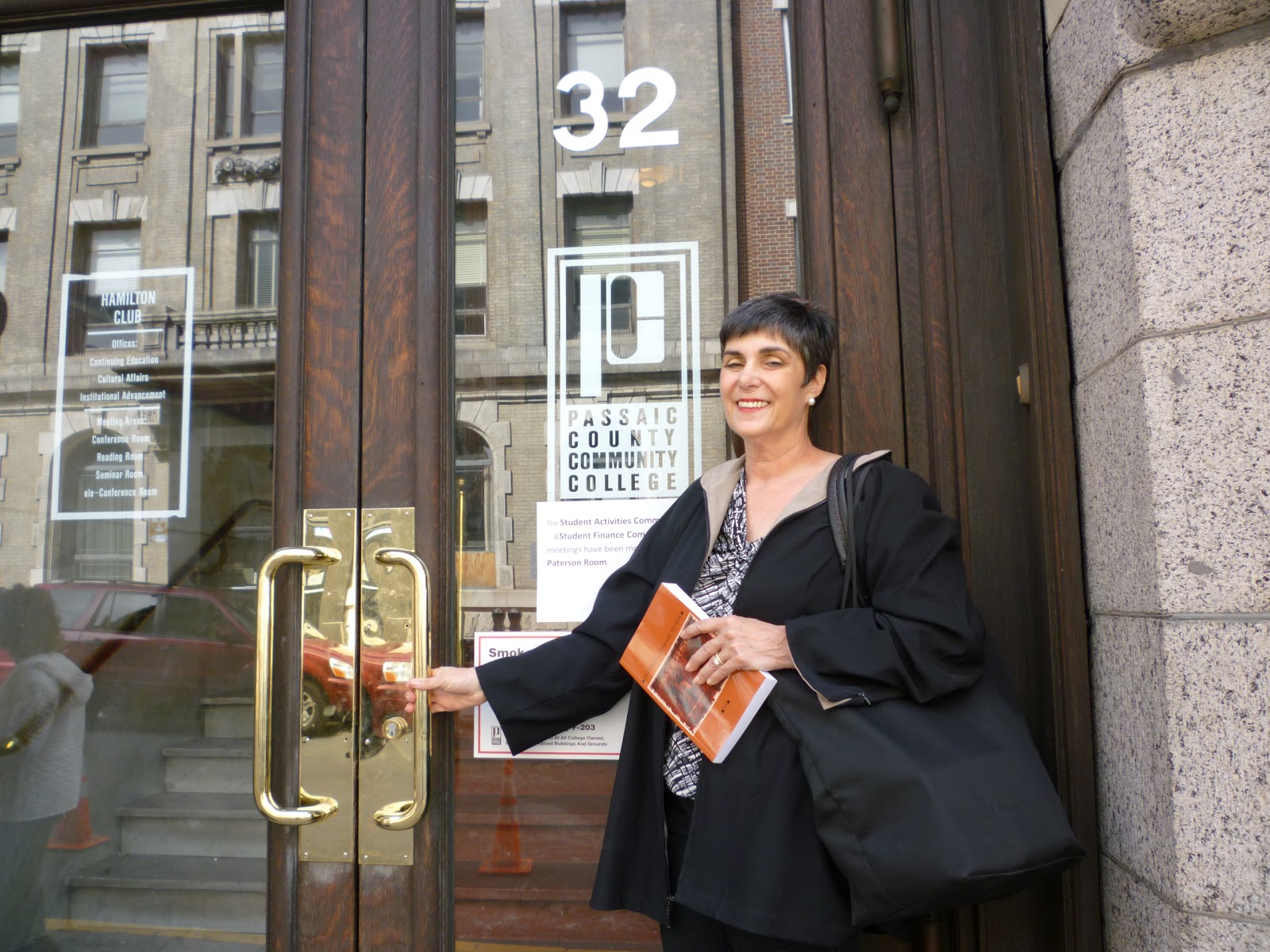

 I celebrated National Poetry Month by giving two readings: the first reading was for The Distinguished Poets Series of the Poetry Center at Passaic County Community College in New Jersey honoring the 2011 Paterson Poetry Prize winners. The finalists included myself, Michael Cirelli, W.D. Ehrhart, Erica Miriam Fabri, Rebecca Foust, and Jackie Sheeler. Elizabeth Alexander was the 2011 Paterson Poetry Prize winner. She, unfortunately, could not attend the reading due to the sudden death of her husband. My condolences to Elizabeth and her family.
 Maria Mazziotti Gillan (shown directly below) who is executive director gave a brilliant introduction. Tony Medina is shown below reading from his poetry collection My Old Man Was Always on the Lam (NYQ Books) as is Jackie Sheeler reading from her collection Earthquake Comes to Harlem (NYQ Books) and Erica Miriam Fabri reading from her book Dialect of a Skirt (Hanging Loose Press.) My thanks to my husband for taking these pictures. Micheal Cirelli (Vacations on The Black Star Line, Hanging Loose Press), W. D. Ehrhart (The Bodies Beneath the Table, Adastra Press) and Rebecca Foust (All That Pitiless Song, Many Mountains Moving Press) read as well.


 The other reading I gave was at the library in my home town, North
Babylon on Long Island in New York. The library which is located
directly across from my old high school. How wonderful to see my family
and old friends!
The other reading I gave was at the library in my home town, North
Babylon on Long Island in New York. The library which is located
directly across from my old high school. How wonderful to see my family
and old friends!

in high school
Wednesday, March 7, 2012
Women Writers--5 Lines to Remember
In honor of Women's History Month, here's a list of 5 lines to remember written by women writers.
"....I chose to walk here. And to draw this circle."
--Adrienne Rich
"Man, I am talking with you
In my secret woman voice
And I would like it to feel
Like something from the inside of your head.'
--Alicia Suskin Ostriker
"listen,
you a wonder.
you a city
of a woman"
--Lucille Clifton
"Right now as I am talking to you and as you are being talked
to, without letup, it is becoming clear that gertrude stein has
hijacked me and that this feeling that you are having now as
you read this, that this is what it feels like to be inside
gertrude stein. This is what it feels like to be a huge type-
writer in a dress...."
--Lynn Emanuel
"....if life
survives us, the body will
be our book & keep on
singing."
--Meredith Striker
"....I chose to walk here. And to draw this circle."
--Adrienne Rich
"Man, I am talking with you
In my secret woman voice
And I would like it to feel
Like something from the inside of your head.'
--Alicia Suskin Ostriker
"listen,
you a wonder.
you a city
of a woman"
--Lucille Clifton
"Right now as I am talking to you and as you are being talked
to, without letup, it is becoming clear that gertrude stein has
hijacked me and that this feeling that you are having now as
you read this, that this is what it feels like to be inside
gertrude stein. This is what it feels like to be a huge type-
writer in a dress...."
--Lynn Emanuel
"....if life
survives us, the body will
be our book & keep on
singing."
--Meredith Striker
Subscribe to:
Posts (Atom)